
Tools & Ingredients
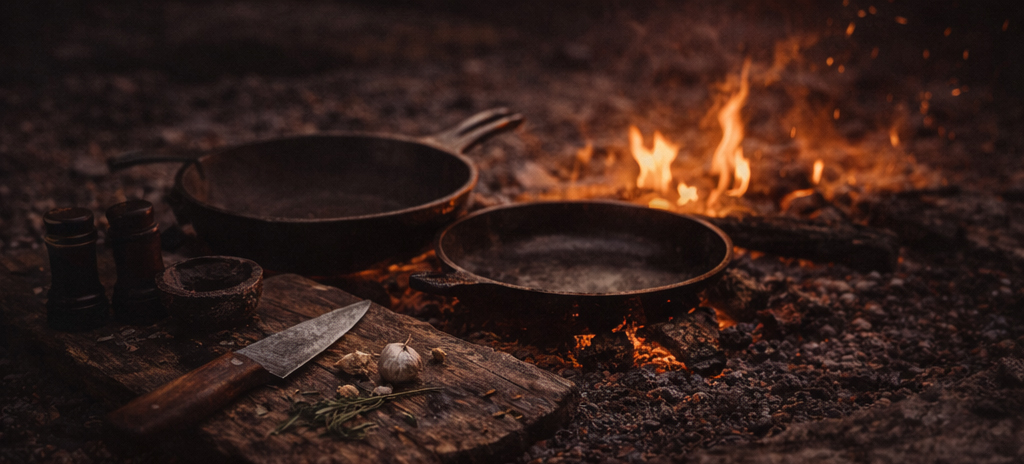
What We Cook With
I don’t cook with gadgets or shortcuts. I cook with heat, time, and tools that have weight and history.
Every knife, pan, and bowl has a purpose — not to impress, but to endure. Ingredients stay close to their raw form: vegetables, spice, meat, salt, fire.
There is no excess here. No decoration for the camera.
Just materials that respond to flame, hands that move slowly, and flavors that are shaped by patience rather than control.
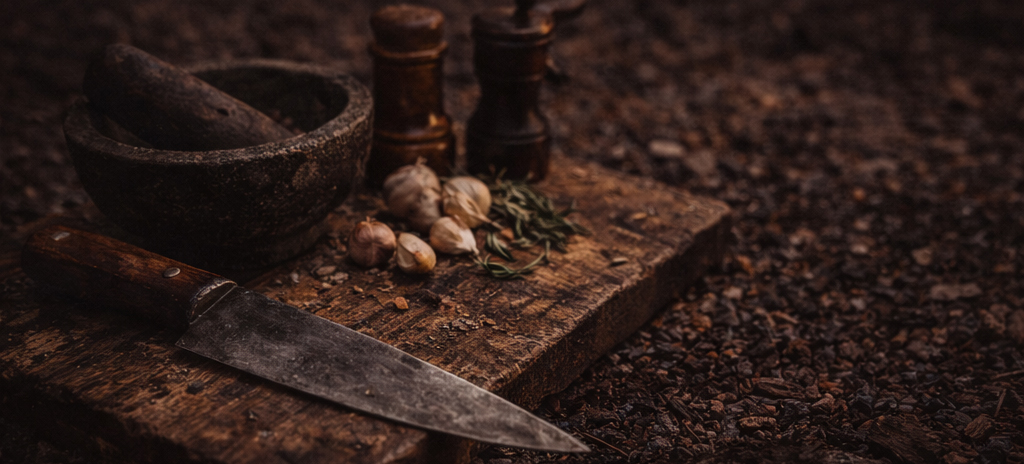
Tools That Matter
I don’t collect gear. I rely on a small circle of tools that can take heat, smoke, and repetition.
Every piece earns its place through use — not by design, brand, or trend. If it survives the fire, if it works the same after the hundredth time, it stays.
These tools are not meant to impress. They are meant to last, to carry marks, to age with the process.
Cooking here is physical and slow. The tools are an extension of the hands — nothing more, nothing less.
Cast Iron
Wok, skillet, pot — heavy, steady, and unforgiving. Cast iron holds heat, responds slowly, and rewards patience. Perfect for real fire and real control.
Steel & Edge
A hand-forged knife and a simple sharpening routine. No systems, no gadgets — just steel, stone, and attention. The edge tells you everything you need to know.
Wood
Wooden boards, spoons, and bowls for everyday work. A cast iron pestle and mortar for spices and roots. Warm hands, solid weight, quiet presence.
Fire Tools
Tongs, gloves, and space around the flame. Fire is not rushed or forced. The most important tool is time.
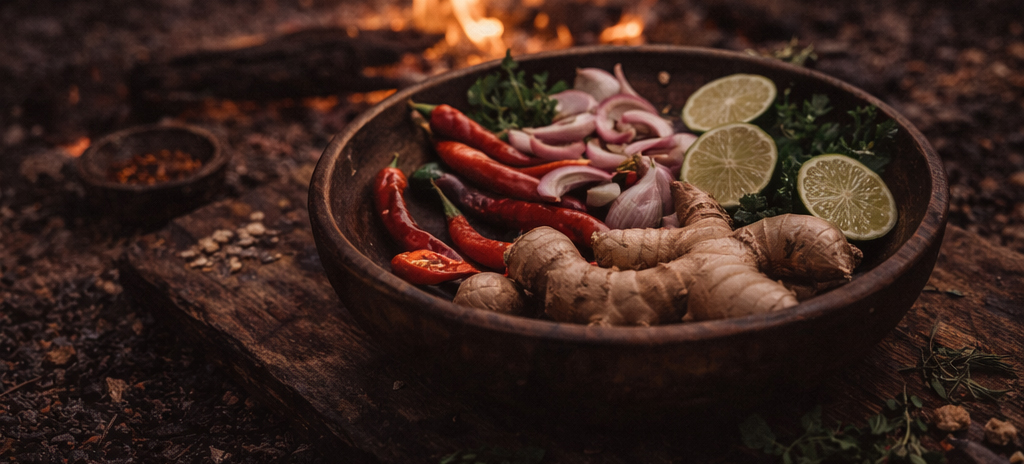
Ingredients I Trust
I keep ingredients honest and bold. Fresh elements, simple structure, deep flavor.
I work with what fire understands best — whole cuts, bones, fat, spice. Ingredients are chosen for how they react to heat, not for decoration.
When something is good, it doesn’t need to be hidden. It needs space, time, and the right moment to be finished.
Some heat comes from my own hands — I make my own chili sauces under the name Hell’s Sauce, built around the four elements: fire, water, earth, and air.
They’re used sparingly, not to overpower, but to underline what’s already there.
Protein
Chicken, beef, fish — often bone-in. Structure matters. Fire needs resistance.
Heat & Fat
Oil, butter, coconut milk. The base that carries smoke, spice, and depth.
Aromatics
Shallot, ginger, spring onion, garlic. The first sound in the pan. The beginning of the rhythm.
Acid & Finish
Lime, herbs, pomegranate, salt. Brightness at the end. A clean cut through the heat.
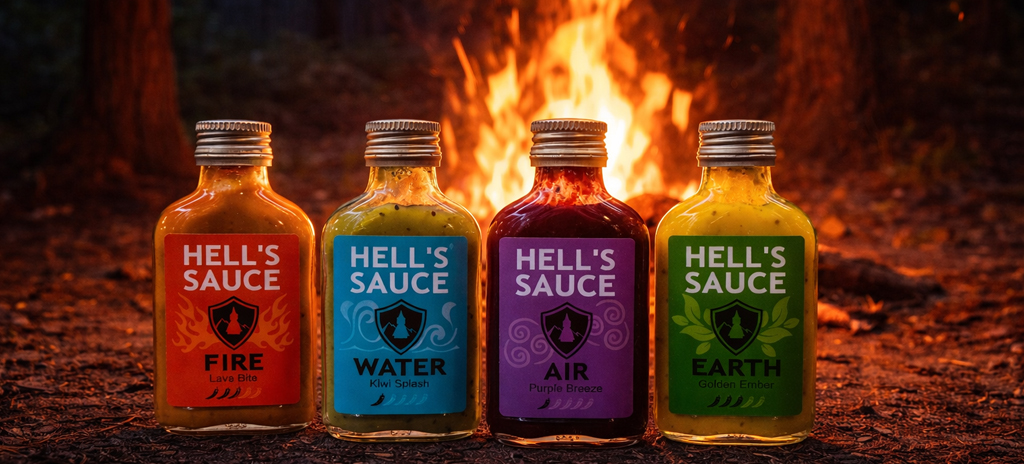
Hell’s Sauce — The Four Elements
Heat is not just intensity. It has character, direction, and weight.
Hell’s Sauce is a small series of chili sauces I make by hand, each built around one element. Not to dominate the dish — but to guide it.
Used sparingly. Chosen with intention. Fire always comes first.
Fire
Direct. Sharp. Immediate. Built for searing, meat, and moments when heat should be felt without explanation.
Water
Fluid, bright, controlled. For balance, freshness, and dishes that need movement rather than force.
Earth
Deep, grounded, slow. Dark spice, warmth, and body. Made for long cooks and cast iron.
Air
Light, aromatic, lingering. Heat that rises, fades, and stays in memory rather than on the tongue.
My Rules
Natural light and real fire. No digital overprocessing.
Slow hands. Let the sound breathe.
Simple ingredients. Flavor comes from heat and timing.
Tools over trends. Durable, repeatable, quiet.
What I Use Right Now
Forged knife, cast iron wok, wooden bowls, heavy pepper & salt mills, mortar & pestle. Ingredients change with each cook — the approach stays the same.